















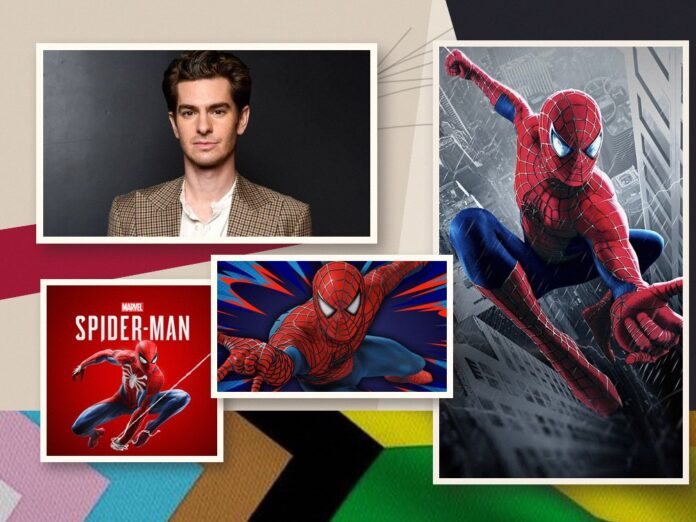
Andrew Garfield has once again backed the idea of a gay or bisexual Spider-Man, more than a decade after first questioning why Peter Parker could not be queer.
The British actor, who played the superhero in The Amazing Spider-Man films, told Entertainment Weekly that his position had not changed.
“I just still believe that anyone can be in that suit,” Garfield said.
His comments reiterate the argument he first made in 2013: that Spider-Man’s greatest strength is the ability of people from different backgrounds and identities to imagine themselves beneath the mask.
Spider-Man’s Suit Can Represent Anyone
Garfield said the character’s universal appeal comes partly from the anonymity provided by the famous red-and-blue costume.
“You don’t see skin colour, you don’t see gender, you don’t see sexuality,” he explained.
That allows viewers to project themselves into the role, regardless of whether their identity matches the versions of Peter Parker traditionally portrayed in films and comics.
Garfield described his original comments as a rebellious challenge to the limitations placed around established characters.
He said he remains attracted to the idea of a world in which different people and identities are included and respected.
For generations of LGBTQ+ fans, that inclusion has often meant having to imagine themselves within superhero stories that rarely acknowledged them directly.
Garfield’s argument is simple: if Spider-Man is supposed to represent everyone, there should be room beneath the mask for queer people as well.
Garfield First Raised The Idea In 2013
Garfield first made headlines in 2013 while promoting The Amazing Spider-Man 2.
During an interview, he questioned why Peter Parker could not explore bisexuality or develop feelings for another man.
He also floated the possibility of reimagining Mary Jane Watson as a male character, suggesting Michael B. Jordan for the role.
The comments came at a time when openly LGBTQ+ characters remained extremely rare in major superhero films.
Garfield later revealed that he faced pressure to retract or apologise for suggesting Peter Parker could be bisexual.
He criticised the apparent concern that a queer storyline might discourage homophobic audiences from buying tickets.
Despite that pressure, Garfield has continued arguing that Spider-Man should be capable of representing people across different races, genders and sexualities.
His latest comments confirm that more than a decade of franchise reboots, multiverses and new versions of the character have not changed his mind.
Queer Spider-Man Already Exists In Marvel Comics
Peter Parker has not been portrayed as openly gay or bisexual in Sony’s live-action Spider-Man films.
However, a queer Spider-Man is already part of Marvel Comics canon.
Marvel introduced Web-Weaver, an openly gay Spider-Man variant named Cooper Coen, in Edge of Spider-Verse #5 in September 2022.
Created by writer Steve Foxe and artist Kris Anka, Cooper is a fashion student who gains spider powers after being bitten by the radioactive spider originally destined for his universe’s Peter Parker.
He later creates his own distinctive costume and becomes the superhero Web-Weaver.
The character’s existence means Marvel has already demonstrated that the Spider-Man identity does not have to belong exclusively to a straight Peter Parker.
Web-Weaver is a separate character rather than a queer reinterpretation of Peter, but his introduction expanded who can officially occupy a place within the Spider-Verse.
LGBTQ+ Representation Still Lags On The Big Screen
The cinematic Spider-Verse has become increasingly diverse.
Miles Morales gave audiences a Black and Puerto Rican Spider-Man, while Gwen Stacy, Peni Parker and numerous other variants have demonstrated that the role can move far beyond its original incarnation.
The animated films have included Spider-people of different races, nationalities, genders, ages and even species.
Yet no Spider-Man appearing in a major live-action film has been openly LGBTQ+.
That absence is increasingly noticeable as superhero franchises embrace multiverse stories specifically designed to introduce radically different versions of familiar characters.
A gay or bisexual Spider-Man would not require replacing every existing version of Peter Parker. The multiverse provides almost unlimited opportunities to introduce a queer variant alongside the characters audiences already know.
Garfield Is Expressing Support — Not Announcing A Film
Garfield’s comments should not be interpreted as confirmation that Sony or Marvel is developing a gay Spider-Man movie.
No queer live-action Spider-Man project has been announced, and Garfield did not suggest that he was personally returning to play a bisexual version of Peter Parker.
Instead, he was restating a principle he has supported since 2013: the idea that established superheroes can evolve and represent a wider range of people.
That position feels considerably less radical today than it did when Garfield first suggested it.
Web-Weaver now exists in the comics, Miles Morales has become one of Marvel’s most popular characters and the Spider-Verse has established that audiences will embrace heroes who are not Peter Parker.
The remaining question is whether the live-action films will eventually demonstrate the same willingness to include an openly LGBTQ+ Spider-Man.
If anyone can wear the mask, as Garfield believes, there is little reason the next person beneath it could not be gay.
The news team for Gay Nation love tips from our readers. Got tips or a news story that you would like published? Go here to tell us something.
Visit the Gay Nation store Now