

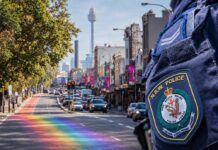









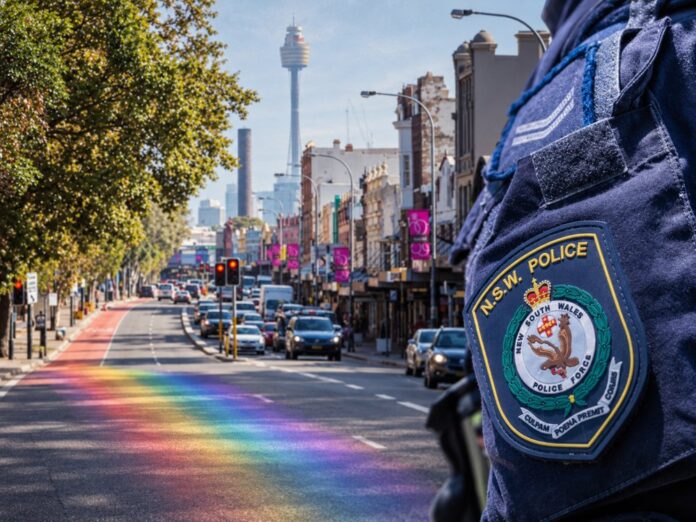
NSW Police have defended a major drug-dog operation across Sydney’s Oxford Street nightlife precinct after LGBTQ+ patrons and community advocates described the police presence as intimidating and questioned why queer venues were again being searched.
More than a dozen officers were filmed entering at least one Oxford Street nightclub with a drug detection dog on Saturday, 12 September.
NSW Police say the wider “intelligence-led” operation visited 14 licensed premises, five or six of which were venues frequented by LGBTQ+ communities.
Deputy Commissioner Peter McKenna rejected accusations that queer businesses or patrons had been deliberately targeted, describing some of the criticism as “considerable exaggerations” and “histrionics”.
The operation has nevertheless reignited a much larger debate about policing, drug harm reduction and community trust on Oxford Street — particularly because similar searches conducted just three months earlier are already under scrutiny from the state’s police watchdog.
Police Reject Claims Queer Venues Were Targeted
Speaking to ABC Sydney, McKenna said the September operation was based on intelligence and extended beyond LGBTQ+ venues.
“People saying that we were raiding or targeting any community — or picking on anyone in particular — that’s not the case,” he said.
“That’s complete misinformation.”
Police say officers searched 65 people across the operation, resulting in 28 drug detections, 12 fines, six cannabis cautions and one move-on direction.
McKenna said he had personally reviewed police body-worn camera footage and believed the officers were “polite, professional [and] unobtrusive”.
He also pointed to a separate drug-dog operation conducted in Kings Cross on the same night as evidence the policing activity was not confined to Sydney’s LGBTQ+ precinct.
Some patrons experienced the Oxford Street operation very differently.
Video recorded inside one nightclub shows more than a dozen officers entering alongside a drug detection dog.
Witness James Twigg said around 20 officers appeared to “storm” the venue, leaving patrons uncomfortable and causing many to leave.
“You kind of think of those images of the 1970s and the way that the police dealt with the LGBT community there,” Twigg said.
He also questioned the financial impact on businesses when a large and highly visible police operation prompts customers to abandon a venue.
Sydney MP Questions Police Priorities
Independent Sydney MP Alex Greenwich has questioned why so many police resources were deployed across LGBTQ+ venues when the operation largely resulted in fines and cautions.
“Why so many police resources were deployed at LGBTQ venues that resulted in a handful of cautions and fine?” Greenwich said.
He said patrons had contacted him throughout the weekend to report feeling targeted or intimidated by the police presence.
“I think we really need a bit of a fresh approach because the police actions on the weekend really work against the government’s vibrancy agenda,” he said.
Greenwich is referring the latest operation to the Law Enforcement Conduct Commission for scrutiny.
Sydney Lord Mayor Clover Moore has also raised concerns about the repeated use of drug detection dogs within the Oxford Street precinct.
NSW Premier Chris Minns, however, backed the police response and rejected suggestions officers had singled out the LGBTQ+ community.
“They do have to confront what is often trade in illegal substances,” Minns said.
“If there’s going to be trade in illegal narcotics in Sydney institutions, then you can expect a response from police.”
Second Oxford Street Operation In Three Months
Community concern has been intensified by a similar police operation on 13 June, during Pride Month.
That operation involved drug detection dogs entering several venues in and around Sydney’s LGBTQ+ nightlife district, including Universal Sydney, Kinselas and Palms.
Patrons subsequently made allegations of aggressive and intimidating behaviour, including claims that people were shoved, pushed against walls or required to remove clothing in public view.
NSW Police conducted an internal investigation and initially found no aggression or unlawful conduct by officers.
However, the Law Enforcement Conduct Commission later used its statutory powers to direct police to reopen the misconduct investigation.
That investigation had not concluded when officers returned to Oxford Street for the September operation.
For community advocates, the timing raises questions about why another high-visibility drug-dog operation was conducted before concerns surrounding the earlier searches had been resolved.
Oxford Street’s History Gives The Raids Added Weight
A large police presence inside an LGBTQ+ venue does not occur in a historical vacuum.
Sydney’s queer community has a long and frequently painful relationship with police, most famously illustrated by the violence and arrests directed at protesters during the first Sydney Gay and Lesbian Mardi Gras in 1978.
Oxford Street later became one of Australia’s most recognisable LGBTQ+ nightlife and cultural precincts.
Although relations between police and queer communities have changed substantially over the decades, that history continues to shape how highly visible policing operations are experienced.
For some patrons, watching large numbers of officers and a drug detection dog enter a queer nightclub recalls a period when LGBTQ+ venues and gatherings were routinely subjected to police surveillance and harassment.
That does not prove the September operation deliberately targeted people because of their sexuality or gender identity.
It does explain why police claims about the operation’s intent may not resolve concerns about its impact.
Redfern Legal Centre Condemns Drug-Dog Operations
Redfern Legal Centre has accused NSW Police of repeatedly targeting Oxford Street patrons and called the raids disproportionate.
Police accountability practice lead Rian Terrell said the centre was particularly concerned that officers had returned while the investigation into the June operation remained unresolved.
“Drug detection dogs are intimidating and a safety risk,” Terrell said.
The organisation argues that the presence of dogs can encourage people carrying drugs to consume them rapidly before encountering police — behaviour sometimes described as panic consumption or “preloading”.
That can create additional health risks rather than preventing harm.
Redfern Legal Centre also argues that drug-dog searches frequently focus police resources on people carrying small quantities for personal use without meaningfully disrupting organised drug supply.
Do Drug Dogs Make Nightlife Safer?
The controversy extends beyond the question of whether LGBTQ+ venues were disproportionately affected.
Harm-reduction organisations have long questioned the safety and effectiveness of drug detection dogs at festivals, train stations and licensed venues.
Night Time Industries Association vice-chair James Thorpe said issuing fines for small-scale possession should not be confused with dismantling drug-distribution networks.
Police maintain that officers must be able to conduct operations at any licensed premises where intelligence indicates drugs may be present.
That disagreement sits at the centre of the Oxford Street dispute.
Police say they are applying drug laws across Sydney’s nightlife economy.
Community and nightlife advocates argue that flooding venues with officers and detection dogs causes distress, undermines businesses and damages trust without addressing the source of illegal drug supply.
NSW Is Pursuing Two Different Drug Strategies
The raids also highlight an apparent tension within the NSW Government’s approach to drug policy.
Earlier in September, the government committed $4.3 million to continue drug-checking services at selected music festivals following a 12-month trial.
From October, the anonymous service will operate at up to 15 festivals each year, allowing people to have substances tested for strength and unexpected ingredients while receiving health advice.
The decision represents a significant investment in harm reduction.
However, the government has rejected calls to introduce wider community-based drug checking or discontinue controversial policing methods such as drug-dog searches.
That means NSW is simultaneously expanding health-focused drug checking at selected festivals while continuing high-visibility enforcement operations inside nightlife venues.
For LGBTQ+ advocates, the difference in approach is difficult to ignore.
If harm reduction can be treated as a legitimate public-health response at festivals, they argue, it should also form part of the government’s approach to established nightlife precincts.
Community Trust Is Again Under Pressure
The central question is not simply whether LGBTQ+ venues were the only businesses searched.
They were not.
It is whether repeatedly sending large groups of officers and drug detection dogs into queer venues is proportionate, effective and sensitive to the precinct’s history.
McKenna maintains that officers acted professionally and that criticism of the operation has been exaggerated.
Patrons, legal advocates and elected representatives say the visible impact on the community cannot be dismissed simply because police deny discriminatory intent.
The reopened investigation into June’s operation may eventually provide greater clarity about the conduct of individual officers.
In the meantime, the September searches have deepened an already significant divide over how safety should be maintained in one of Australia’s most important LGBTQ+ precincts.
For many in Sydney’s queer community, safety means being protected from violence, harassment and predatory behaviour without feeling that the venues in which they gather are themselves under suspicion.
NSW Police insist the operation was not targeted.
Many patrons and advocates remain unconvinced.
The news team for Gay Nation love tips from our readers. Got tips or a news story that you would like published? Go here to tell us something.
Visit the Gay Nation store Now